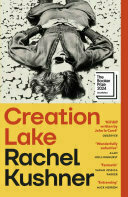
Read: City of Vengeance by D. V. Bishop šŸ“šVery readable and atmospheric. I kept wanting to return to it despite the central murder mystery being puny and the outcome of the Medici political shenanigans being well known.

Squeaky stairs and the Upside Down Marshmallow test

I learned by my teens that the sides of stairs don’t squeak. I needed to stay inaudible and invisible to my parents while they screamed at each other in the living room.

Even though it was past bedtime, I knew they could easily turn their venomous, never ending vitriol on me instead of each other, and I needed to hear them to get an early warning. That was why I was creeping down the stairs. And I needed to stay invisible while I got close enough to the plywood doors in their 1960s suburban chalet while I did it.

My parents had been screaming at each since I could remember. Well, almost. There were periods of tense silence, peaking with the glorious happiness of a few hours here and there where there was no tension at all. But ā€˜assume screaming’ was the safe money option.

There was always the danger, as my bare feet stepped softly down the stairs’ cheap nylon carpet, that the door would burst open and they’d catch me spying on them. Disappearing like Bilbo Baggins would have been ideal but I had no magical ring.

So my Plan B was to divert to the kitchen, pretending I was coming downstairs from the safety of my bedroom to get a snack. The dog had learned a similar trick in reverse — if a human spotted it heading upstairs, it had learned to abort quickly and steer into my father’s office at the bottom of the stairs.

It generally worked. In fact, over a couple of years, I used Plan B enough that I put on a lot of weight, making me even less likely to disappear even though I wanted to more and more.

I hit a downward spiral. I got fatter, I hated myself even more, became more anxious, needed to know what was going on even more, ate more chocolate biscuits, became larger, got more of a sugar hit, ate more chocolate biscuits, got fatter.

On the photos from my 18th birthday, I was puzzled by the why my shirt seemed to take a long way down to reach my jeans. Friends pointed out it had to go over my belly.

Somewhere in my head, I knew I was miserable, and rationally it seemed likely that there was more going on than my mother’s opinion of greed and laziness.

Turns out my intuition was right, because there’s a pretty convincing theory that, sugar addiction aside, trauma can play out by not being able to resist food.

It’s a spin on the Marshmallow Test [link]. You get a young — probably pre school age — child and put them in a room with a marshmallow on the table. Then you leave them, saying you’ll be back later and you’ll bring another marshmallow, which they can have if they’re a well behaved child and don’t eat the one in front of them while they’re alone.

With this paper from 1970 and this paper from 1972 to back it up.

Like anyone under well-designed torture, the subjects almost always break. Fortunately for university research ethics committees, the downside is they get a marshmallow instead of life changing injuries. Eating cupcake is not yet a life-changing injury. The only metric is how long it takes.

And that metric, for the sadists who designed this experiment, measures executive function, and specifically the element of executive function we call self control. The longer you hold back from wolfing the marshmallow, the better you’ll do as an adult.

It’s your adulting number, kind of.

I simplify grotesquely, but broadly speaking, it’s one of the best predictors of success in future life. When the experiment was originally carried out, it looked like self control was innate, or close enough. Maybe it came from intelligence, maybe imagination, but whatever, it was interpreted as a cause, not an effect. Besides, an effect of what, exactly?

For forty years.

Then researchers had another think about it, and upended the cupcake to consider if it might be the effect of something. Like, say the trauma of growing up with parents who saw you as the convenient one-stop destination for their own apocalyptic dysfunction.

How would that work?

Often one of markers of a traumatic environment is unpredictability. Abusers give, and abusers take away, and they do it randomly in order to create their effects (which you could trace back to B F Skinner and his rats, if you wanted, but nobody does because determinism is frowned upon these days).

More on Skinner and his rats here and here.

Plus a video.

Case in point. Once when I was at high school, I forgot I had band practice and got home from school an hour and a half late, bracing myself for my mother’s fury at not telling her. But she didn’t notice. A couple of days later, I got in ten minutes late and got a full on vitriol-bombardment, the kind that only the children of abusers understand.

With good-enough parenting, a child does a thing, and their your parent responds. You draw a conclusion - this was a bad thing, not to be repeated, or a good thing to be done as much as possible.

With the dysfunction outsourcing model of parenting, next time that situation comes up, you carefully avoid doing it — and you get screamed at for not doing it. Or, if it was apparently a good thing the first time, you’re careful to do it again. This time however, it’s a mortal sin and you are damned for all time.

The child can’t draw any inferences about how the world works, and since drawing inferences about the world is one of the main things children spend their time doing, it is most definitely A Thing.

The parent acts like this because to them, the child is just the outsourcing contractor for their own dysfunction. The dysfunction is too intense for the parent to think about anything else, such as the effect on their child.

It helps that people are more malleable when they don’t have a clue what’s going on. When the child is baffled and scared, it’s going to hide and let the parent get on with their dysfunction, which is what the parent wants. So for a parent on the Dark Triad as my mother probably was, it’s win-win.

Meanwhile, the child concludes that the future is entirely beyond prediction, let alone control, so logically, the most rational option becomes to grab what you can, when you can.

Like marshmallows.

Someone might take it off you, randomly. So eat it now. Eat all of them now.

It doesn’t take a genius to extend the principle: eat all chocolate, drink all the beer, pop all the drugs, shag all the strangers, spend all the pay cheque.

Your brain lives in a scarcity market where it’s logical to not wait. Executive function, schmexecutive function.

So back to little me sneaking past the living room door, feet on the non-squeaking sides of the stairs, stressed about being caught. My logical solution - ā€˜just getting a snack’ was fine in the moment: sugar, dopamine, quelling the cortisol and avoiding getting screamed at.

In the longer term, of course I got fat.

The question, as Marx pointed out, was to change it.

More of the same, it turns out, for me, until a few years ago, and alone and emotionally broken, and with the line from Les Miserables ā€˜ā€¦ no one is coming to help you to die’ in my head, I decided I needed to do something different. Anything, pretty much.

So I started Couch to 5k, and I’ve kept it up since, and added a bunch of other sportsing to my life. Planned runs and other sportsing, planned meals, planned work stuff.

Weirdly for teenage me, I enjoy the sportsing and the eating healthily that goes with it. I’m terrible at sport and I’ve always liked fruit and veg and the healthy stuff. There are biochemicals going on with this of course, but maybe something else. It feels like I’ve flipped the cupcake. If unpredictability caused the lack of impulse control, then being predictable, routine, and generally boring (compared at least to the random emotional apocalypse of my childhood) makes impulse control easier. I know what’s coming. I have my weeks, days, hours planned. I’m no longer frozen on the stairs waiting for the living room door to fly open and the terrible onslaught to start.

Does anyone have a cloud service that works seamlessly across Windows and Linux? So far I've tried OneDrive, iCloud, pCloud, Filen, Mega, Dropbox and Box. Nothing meets my simple needs.

I want one that ‘just works’. I want to be able to work in Linux or Windows in my dualbooting laptop with my data in its own partition, so LibreOffice on Windows and LibreOffice on Linux are accessing the same files. Then I want those files from that partition to sync to the cloud, whether I’m using Linux or Windows.

Not feeding AI, and keeping my stuff private in general would be great, but at this point I’m ready to settle for ‘Just Works’ which seems to be beyond the abilities of any cloud services.

Here’s my experience:

  • OneDrive: takes over Windows and doesn’t have proper sync on Linux
  • iCloud: no integration with Linux, just a standalone app
  • Google: uses weird strings of characters for filenames in Linux to work with them, and this screws up access from other systems. Also, it’s Google.
  • @pCloud : in Linux, doesn’t automount, and when it does mount, frequently doubles up. Flakey integration with file managers.
  • Filen: flakiness in general and similar mounting problems. Plus the company doesn’t seem the stablest.
  • Mega: persistently duplicating files by uploading them from both Linux and Windows, effectively halving my available space and introducing syncing issues. Their support is currently being slow and obtuse.
  • Dropbox: horrendously expensive
  • Box: no integration with Linux, just a standalone app

I want to use Linux, because it’s a Good Thing, but it seems to be the weak link here. If I didn’t use Linux, then OneDrive, iCloud, Google and Box would be fine. Probably the others too.

And no, not gonna self host or spend ages tweaking bash scripts on Linux. That sounds like even more of a nightmare.

#Linux

It is a dead parrot.

Read: Death on the Island by Eliza Reid šŸ“š Christie fanfic, right down to the island location, and Roger Ackroyd shaped red herring. Passed the time and didn’t annoy me, so there’s that. #Bookstodon #BookSky #booksky #iamreading

Linux is Right and Righteous, but I don't want to pay a cloud service over the odds and still have to tit about with rsync

The other thing that’s putting me off Linux at the moment is the flakey cloud services. Theoretically, Ubuntu’s Network package should make it seamless with the big ones like Google but it does weird shit with filenames in practice, and seems inconsistent with offline access. I’ve tried pCloud, Filen and MEGA and they all have some combination of not mounting, not unmounting, duplicating mounts, costing stupid amounts, and seeming a bit flakey as a company.

I just want something I can set up and forget about. I don’t have the time, nerdy fanaticism or patience to mess around with scripts, rsync and rclone, and from what I’ve seen they need regular tending too. For the same reason, I’m not selfhosting.

Whereas on Windows (and Mac, when I used one), OneDrive, Google, iCloud, Box, and MEGA (and many others) Just Work and integrate seamlessly.

Yes I know MS, Google, Apple et al put obstacles in the way of small developers, and open source by its nature is full of plucky fighter for Free As In Speech And Beer - but still. I don’t want to pay a cloud service over the odds and still have to tit about with rsync in the command line to get it to work.

Asda: re your Times Radio advert in which someone identifies herself as a ā€˜colleague’. Your corporate decision to replace the word ā€˜employee’ with the less exploitative sounding ā€˜colleague’ does not make this woman my colleague. I do not work with her. #asda #uk #TimesRadio

Breaking news: a slim young guy on the opposite pavement suddenly stopped, put down the coke bottles he had in each hand, pulled his t shirt up, and watched himself slapping his pale white stomach a few times. Then he replaced the t shirt, picked up the bottles and moved on. #writing

Rewriting is so much easier than the initial writing. Sadly, I can’t rewrite without having writ. #writing #amwriting #writingcommunity

Abandoned: Kairos by Jenny Erpenbeck šŸ“š DNF. East German love affair round end of East Germany, trans. Michael Hoffman, booker winner 2024 Intense and Germanic and pervy. Worth another go at reading when I have the headspace.

Read: The Hacienda by Isabel CaƱas šŸ“š Gabriel Garcia Marquez writes Rebecca, and both elements are Good Things. #booksky #BookSky #bookstodon #amreading

Read: Astor by Anderson Cooper šŸ“š Wearying and padded out with tangential ‘context’. Most bios can be top and tailed: first 2 chapters for the origin story, then the last quarter of the book because there’s actual story. Everything in between is predictable. #booksky #BookSky #bookstodon #amreading

Read: Night of Camp David by Fletcher Knebel šŸ“š Recognisably, POTUS goes mad and wants to take over Canada, and surveil everyone. Unrecognisably, the power elite try to stop him rather than saying ‘where’s my share?’. Shonky and dated in some ways but weirdly relevant. #booksky #bookstodon #amreading

Very, very difficult to get my head round the most powerful, richest, and until recently, in many ways the free-est country in the world flip into authoritarian Fascism in a few months. It’s going to change everything in the same way the fall of Communism did.

What’s the most rock solid and smoothest cloud storage that works across iOS, Windows and Linux?

I only need 100-200g and I’m fine with the standard levels of security. I’m using it for synching mostly documents and photos across devices, and as an offsite backup. Not scraping for AI would be good, but it’s not a dealbreaker. What I definitely need is synching and mounting automatically. I mostly work on Win11 or Linux Mint laptop but being able to get at documents sometimes on my iPad and occasionally on my iPhone would be useful.

Currently, I’m using …

  • Google Drive (100g) - works smoothly across Windows and iOS but flakey on Linux. Plus it’s, you know, Google.
  • iCloud (50g) - Great on my iOS devices, integrates okay with Win 11, but clunky to the point of useless on Linux.

I also have an old legacy Box account.

I’ve tried pCloud but found it flakey in terms of mounting problems, and slow to update at times. It’s also a bit small and new which worries me when it comes to data security.

I’ve used OneDrive through employers in the past, but it seemed two chunky and corporate for my liking, and at one point it just didn’t have synching between devices. You had to reupload another file. I think they’ve got over that now but still not keen.

Currently giving Mega a trial because it looks to be best integrated across the various OSes.

Anyone have Thoughts?

Read: Ardis - A life on water by Timothy Paleczny

Read: Ardis a life on water by Timothy Paleczny šŸ“š I’m a sucker for wartime shenanigans and science, so this was great for me, with spying and marine biology against the backdrop of WW2 Portugal, plus walk on parts for Ian Fleming and Kim Philby. It weaves together a cast of characters as a nuanced way into the humanity and morality of the hard moral choices forced by wartime, More Graham Greene than James Bond, but more charm and warmth than either of them.

Just finished the vomit draft of quick side-project short story that was only going to be a couple of thousand words then back to the main gig. Quick side project is currently 9500 words. Anyhow, put it away for a week then I’ll come back to do some rewriting. #writingcommunity #amwriting

Read: Transcription by Kate Atkinson

Read: Transcription by Kate Atkinson šŸ“š Fictionalised version of actual counter-spy operations in England against the Germans in WW2. I read the nonfiction book it’s abased on ages ago, and this is pretty much the same ground, but through the eyes of an invented young spy. Atkinson’s funny and perceptive, as usual, and it’s fun to spot the roman-a-clef elements. There’s definitely a Mitford or two knocking about, for instance. There’s also the obligatory queer-wartime-London plotline too.

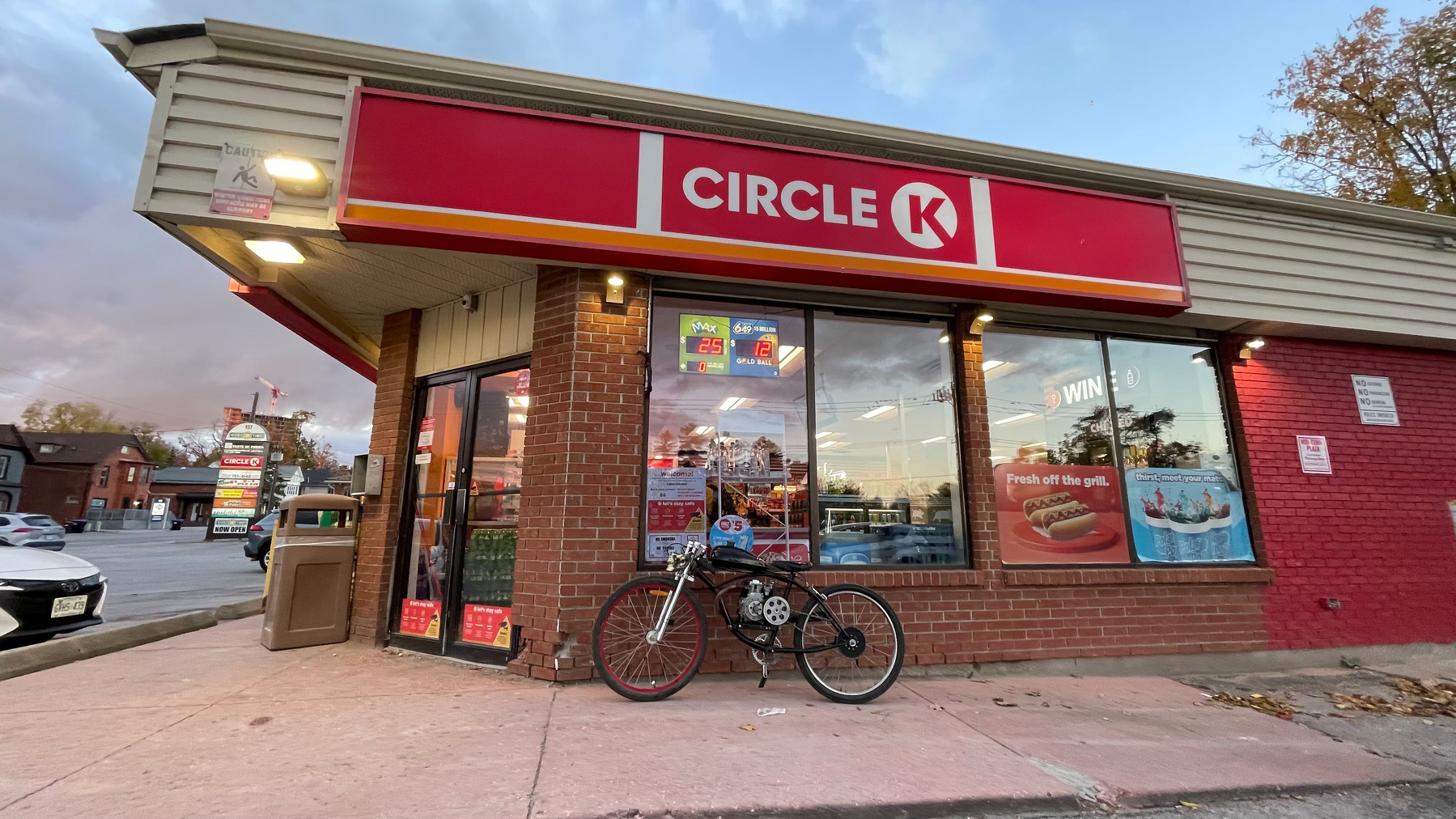
So this was the other Saturday. Both car and dude are normal size, but my iPhone did weird things.

Read: A Necessary Evil by Abir Mukherjee šŸ“š Loved the setting, and the humour. Mysteries can be so po-faced. Made me want to try his non-series thrillers too. #booksky #amreading #bookstodon

My grandfather got out of the car, and casually asked me to move it down the hill while he was inside the office. I was 12.

The first time I acted like an adult while feeling like a kid, but not the last.

Read the full thing here

#WritingCommunity

Read: Triple Cross by Tom Bradby šŸ“š

Smart, efficient, gripping. Does what it says on the can, in a very good way. #bookstodon #booksky #iamreading

Read: My Father’s House by Joseph O’Connor šŸ“š Less than keen on his others, but this is manages to be richly told without losing suspense. #bookstodon #booksky #amreading

Abandoned: Red Queen by Juan Gómez-Jurado šŸ“š

No feeling for pace, language or humans, for people who would secretly prefer a comic but a book makes them feel more intellectual, made worse in the audiobook by Scott Brick’s overwrought self-infatuated narrating style. #bookstodon #booksky #iamreading

Driving my grandfather’s car

My grandfather stretched his left arm across the passenger seat and looked out of the back window of his ancient Renault as he reversed into the undertaker’s yard. I looked up from my book on the back seat and watched his right arm reaching away from me, towards the steering wheel. I was twelve years old.

My grandfather helped the village undertaker with his ā€˜Books’, which were the huge ledgers where he recorded payments, and, far more interestingly, by painstakingly applying small cardboard letters to brass coffin plates to spell out the name and dates of the dead person. It was a similar process to my Letraset transfer letter but he took far more care than I ever did. I had watched him do this on the dining table, the tea-tray at his elbow. Now we were taking the Books and the coffin plates into the undertaker’s office in the village.

My grandfather stopped the car, and pulled on the handbrake. He got out of the car, and casually asked me to move it down the hill while he was inside the office.

ā€œOh, yes,ā€ I said, nonchalantly. He left the keys in the ignition and disappeared into the office, holding the Books and a bag containing a couple of meticulously annotated coffin plates

I sat alone in the car, my book limp in my hand. Was he just assuming that as a male, I had the innate sense of What To Do With Cars, just as he seemed to?

I had no such thing, despite watching males of the family struggling to start our succession of secondhand cars, twisting ignition keys, wriggling gear levers (they were levers, in those days in England), shifting feet between the three pedals. I’d watched as they mended, replaced, sworn. I’d interrogated and earwigged, trying to understand what was going on.

But I had never, ever been behind the wheel of anything more than my pedal car. And that had been many years ago when I had been a lot younger.

Now my grandfather had handed over a full ton of metal car to me with the implicit confidence that I could be trusted with it. I was thrilled and scared.

My grandfather felt like the centre of the village. He was a teacher at the local school. He was chairman (still a chairman in those days) of the parochial church council, he ran a drama group which toured local village halls, which he compered as a stand up Farmer Giles, amusing the local Mothers Unions and Women’s Institutes. Shopkeepers knew him. Everybody knew him. He’d taught them, or he’d been helping them with their Books, or dealing with officialdom. He knew everyone, and I trailed round in his wake.

And now he was assuming I could do this man-thing.

I scrambled between the front seats and sat behind the wheel. I was not a tall child but if I sat on the very edge of the driver’s seat, I would just be able to see over the steering wheel, and the tips of my toes would just about reach the pedals.

I eased off the handbrake, and waited for it gravity to overcome inertia. The car stayed put. I replayed in my mind the car-starting I’d watched dozens of times, and captured that grip of the gear lever, the quick loose push left and right. I hadn’t done that. I tried it, and felt something ease free. Gears, I guessed.

The car started to roll slowly down the hill towards the road, at less than walking pace.

My grandfather had left it in first gear, the result of a cautious mind and decades of cars with ageing brakes.

The car rolled down the slope in a straight line, towards the archway at the bottom of the slope, next to the road.

My foot hovered over the middle pedal. The brake, I knew, from my interrogations.

My hands gripped the steering wheel. The car needed know steering, but this too was what you did when you drove.

Which was what I was now doing for the first time. Even without the engine running. On private land. And very slowly. Downhill. Ten yards. It was enthralling.

The front of the car drew level with the archway, the entrance to the road.

I pushed down on the middle pedal, holding my breath, feeling the resistance against my foot, pressing down further and the car slowing jerkily, twitching me forward.

And the car stopped.

I kept holding my breath.

My fingers closed round the handbrake, pushing the button on the end in, which took my strength than I’d expected, and I pulled the lever up, listening to the ratchets click, till it wouldn’t go any further. I let go of the button, released the brake.

The next move was to lift my foot off the brake pedal, but what if the handbrake needed the gears to be in first, as my grandfather had left it? What if the handbrake wasn’t good enough to keep the car in place on this slope?

I grabbed the gear lever and pushed it forwards to the position I’d pulled it away from a few seconds ago, but it wouldn’t click back into the place where it had been. I had no idea how to solve this.

I would just have to trust the handbrake. I lifted my foot off the footbrake.

The car stayed put.

I breathed out and lent back in the seat, the way I’d seen drivers do after a long, stressful journey.

My grandfather emerged from the undertaker’s office, this time without the Books and the bag of coffin plates. I scrambled between the front seats into the back of the Renault.

My grandfather bowed into the driver’s seat again and twisted the ignition. ā€œYou managed then Freddo.ā€

ā€œYeah.ā€ I had. I had managed. I knew more than I thought I did, as it turned out.

He clicked the handbrake button in and pushed it down. His right foot pushed the brake pedal down. Then, his left foot pressed the clutch down and he eased the gear lever into first.

I remembered this for future use.