I’ve lost interest in politics. British politics isn’t relevant, I don’t have the appetite to the learn the detail of Canadian politics, and anyway, it’s all mad and scary, and will happen whether or not I know about it.
I’ve lost interest in politics. British politics isn’t relevant, I don’t have the appetite to the learn the detail of Canadian politics, and anyway, it’s all mad and scary, and will happen whether or not I know about it.
As everyone says, McCloskey’s very good, and shifting more to character and personal betrayals just makes him even better.
Another one of those tech bro biogs where all the good bits have been in the news anyway.
The sexton had seen this before. A year after the funeral, a thin strip of pale dead yellow grass outlined the shape of a coffin in the burial ground, like it had been crushed by the dark. The sexton had known the occupant of the coffin and he was happier now she was in the earth instead of on it. But the outline worried him. He imagined malignant goo seeping up from crack of the coffin lid. He closed his eyes and prayed it was nature’s goodness fleeing the evil inside the coffin, not her evil returning to wreak revenge.

Finished reading: Everybody Knows by Jordan Harper 📚
Well executed LA Confidential/Chinatown update. Quality pulp fiction.
The lino round the base of the toilet is badly cut, leaving a few millimetres of gap between the porcelain and the curled edge of the vinyl. He lays on his side just a few centimetres away, the floor digging into his shoulder. He’s surrounded by the unforgiving hardness and months of built up scum, and the smell of shit and bleach sliding into his nostrils. In the bath, his guitar lies smashed, its neck broken, the slack strings echoing in the tub, water drumming on it from the showerhead. I am a rock, he thinks.

Finished reading: Patriot by Alexei Navalny 📚
There’s a really good doc with him on BBC iPlayer, which would be time better spent.

Finished reading: Daughter Of Mine by Megan Miranda 📚
Murky past and the web of family tensions in small town America wrapped round a murder mystery. Smart and nuanced, if a bit complicated to keep tabs on if you listen rather than read it.
She catches up with him in the corridor outside the classroom. He’s backed into a corner, she’s holding back, swaying from her ankles, her hand gripping her shoulderbag, pulling the strap down taut. They each have thousands of words - using a few is what just turned the classroom into a killing jar of derision at them they’ve just fled - but nothing will return the humanity that was just sucked out of that room. He tries “Where do they get that…. certainty?” She says “Fear of each other”. He says quietly “We don’t have that”. She says: “We don’t”.
The standard metric for measuring written English clarity in science is called Hemingway. I assume that’s because he worked hard to write clear, simple, concrete prose, rather than ending up alone with his cats, a bottle of rum, and a shotgun.
The reason it’s a cliché is because it’s true, Lloyd Cole sung, clunkily. But the cliché is also true, like mirrors facing each other, infinitely reflecting each other, or a fractal. And none more cliched than American motels. Neon signs, a strip of single storey down at heel rooms at the back with cars parked in front, a crumbling swimming pool with the hint of algae, the simmering highway roaring past a few feet away. Even the quirk is clichéd, or at least having a quirk is a cliché. In this case, a small friendly octopus in the swimming pool.

Finished reading: Don’t Point That Thing at Me by Kyril Bonfiglioli 📚
PG Wodehouse on a bad day pastiching Raymond Chandler. Still wittier than most allegedly ‘humorous’ thrillers though, and an appealingly nasty darkness.

Finished reading: Lucifer’s Banker by Bradley C. Birkenfeld 📚
Messianic blowhard international banker turns dickwaving/self pitying whistleblower after his employers clip his self aggrandising ego. Worth reading for the epic lack of self awareness.
You wouldn’t look twice at the Butterflies Of The Night. The secret of their international dominance has been keeping it drab. Even their outer clothing is matte, as though absorbing light and reflecting none back. You have been surrounded by them and never noticed, I guarantee. When the emergency services roll up after one of their kinetic operations, nobody remembers them. Their operations have led to great wealth and power but it’s never used showily or gaudily. And like discreet old-moneyed families in St James’s or the Hamptons, they recognise each other. Sadly for me, they also recognise impersonators. Instantly.
The winches at the back of the Jerry’s boat creak and haul the net into the stern, and Jerry’s eyes are pinned on the winch, his hand tight on the throttle lever, his breath tight in his chest. Finally the net’s all reeled in, except for its end coiled up in a layered tube, like a bright orange mermaid. We stare at it, shifting our balance as the boat bobs, listening to the waves slapping on the hull, frozen. The net’s not a mermaid. We both know this, because we both did the wrapping, twenty years ago. It’s Jerry’s brother.
Just watching the Trump Not State Of The Union. Do you think Americans understand what a bunch of thick twats they come across as when they chant ‘USA USA USA’?
He knows where each stair creaks, whether it will groan when his foot hits the left, the right, or the middle, as he creeps slowly down from his bedroom. Through the living room door at the bottom, he maps the peaks and crevasses of his parents’ war. Or worse, he hears nothing but the burning fuse of silence, fizzing like a cartoon bomb. The only question is which shrapnel sliver will lodge underneath his skin This is family. This has always been his world. He plans his escape when he gets his 18th birthday card parole.

Finished reading: Fire Weather by John Vaillant 📚
Scary and inclusive, with a nice linking of the fire’s voraciousness with the oil industry’s greed.
Amongst the increasing dross on Substack, there’s someone putting up a word each day as the prompt for a 100-word ‘story’. Plot’s pretty limited at that length, but there’s room for brief character sketches. Here’s a first bash.
“Saloon to the left. Snug to the right. No handsome dangerous cowboys here, just a grubby arse pub in the Midlands. Hers for the last thirty years. She opens the door every day with her soul dribbling out of her like the clogged-prostate drip of piss she’ll find miama’d over the floor of the gents later. She knows the culprit. His daily pint is one of the three she can guarantee to sell every day so she says nothing, but as she pulls it into his named tankard, she visualises the beer as piss. No handsome dangerous cowboys here.”
As a child, I never got lost when I was out. That only happened once I got home.
Famously in the family, as a three year old found wandering alone in a department store in Norwich, a shop assistant had asked me if I was lost, and I’d told her I wasn’t. Which, I wasn’t. I knew where I was. That my mother didn’t know, was her problem.
I especially didn’t get lost with my friend Chris on a bike ride in Norfolk country lanes in the 1970s.
Bike riding was a staple of the passing the holidays, mostly up and down the two hundred yards or so of suburban pavement outside our street 1970s bungalows, up as far as the cul de sac, where we could safely loop round and return.
It was in a network of suburban detached houses, quiet streets segmented with radial spokes of very slightly less quiet roads. We’d been riding up and down that pavement remorselessly for weeks and now we wanted to go further afield.
There was a creased Ordnance Survey map blutacked to the back of the door of my father’s study, laying out the villages around the ours, at two and a half inches to the mile. The map showed places called plantations and old airfields, left over from the war. To the naked eye from the back of a car they looked like woods and fields, but the map labels surely implied they were far less mundane than that. We pored over the maps like staff officers planning a daring raid across enemy territory, crossing the spokes between villages, and negotiated permission for an afternoon’s ride with doubtful parents, as long as I was back in time for tea.
The joke about crossing the border into Norfolk was about putting your calendar back 20 years. My mother went twenty years better. If she didn’t understand it to be a normal part of life in the 1950s in Norfolk, then it was morally wrong. If this sounds like a sepia-warmed “gawd bless ‘er” fond exaggeration for nostalgic effect, it’s not. It’s the literal truth, backed up by hours of furious screaming damnation-wielding rows. She wasn’t religious, just a psychopath who hated everything that happened after her own puberty.
By the time I was 12, I’d worked out that the path of least screaming damnation for me was to emotionally hunker down in the 1950s too, with books by Enid Blyton and Anthony Buckeridge, set if not in the literal than spiritual 1950s.
They had freedom and warmth and safeness. They were an escape into a world where things were clear. You knew there would be outings where people wouldn’t have to give up and come home again because one of the adults was screaming and shouting.
You knew the children would break the rules, but the rules would be consistent and have some kind of logic to them.
You knew the punishments would be something simple and finite and understandable. The muffled shouting of adults while you lay in bed listening wasn’t the parents, it was the bad guys, who would be caught and the world put to rights.
The children in those books would disappear off for the day with no objections. That’s why I expected the whole bike ride expedition not to be a problem. By the standards of Enid Blyton this was no kind of adventure at all. hazy field with a path
It wasn’t even an adventure by my father’s standards. He regularly talked about how he cycle twelve miles each way to school at my age, with its implications of freedom and unmonitored time. You could, I supposed, get up to a lot in the window of time someone would reasonable assume you’d been pedalling home from Norwich.
The day of the ride was bright and summery 1950s-ish days. At least, it was in my head, because that’s where I wanted to be.
The first spoke to cross was the biggest and most dangerous. It separated us from other villages to the north, and this is the one we crossed and cycled to the next village, the one that was just out of the commuter belt of villages mostly made up of streets built by builders when they built houses. These were roads that had existed for hundreds of years. We went to the next village, and the one after that, and it seemed to take hours.
I just measured it Google Maps, now. Five miles and three villages away. It would have been nothing to the Famous Five. But in rural Norfolk, when you’re 11 in the 1970s with no Google and virtually no payphones, five miles away was a whole other world.
It turned out in fact woods and plantations were the same thing. The old airfields were planted with the cabbage and sugarbeet now, just the occasional pillbox and concrete loading ramp surrounded by hedgerows.
Chris and I faffed around, in the vain hope that some Enid Blyton style ne’er do wells would appear, but they didn’t, so we turned our bikes round and headed back. The return journey felt faster than the outward trip and we made good time, were back for tea. We split up at the end of our drives, which faced each other across the suburban street.
In the back garden, I flicked the bike stand down and went inside.
Which was when I discovered that I’d been lost. Lost had been the least of it, in fact, possibly because I was demonstrably no longer lost. The episode had revealed, according to my mother’s onslaught, the full depth of my selfishness, thoughtlessness, evil, and eccentricity. Any deviation from normality was a moral failing.
My father joined the inquest as barrister for the prosecution and the hearing went on for some hours.
I have no idea why, I almost never had any real idea why.
I hadn’t been lost. I known where I’d been. I’d had a few hours of not being answerable or checked up on.
The cycling trip was never repeated. I didn’t dare suggest it. I huddled up with more of the Enid Blyton books, and moved on to a book the neighbour leant me, The Day Of The Jackal, which had sex in it.
Trump planned the ambush to make up ground with his base after he was nice to other foreigners earlier in the week, but the angle of attack was a straightforward narcissistic rant because Zelensky wasn’t being grateful enough to placate the big fragile orange ego.
For at least the last 25 years, since I read Neal Stephenson’s Cryptonomicon, I’ve flirted with Linux every so often, and it’s so much better now than it was. I think Apple’s pricing and Windows' cruft and AI might be making it time to move.
My latest flirt is with the Linux partition of my Chromebook, partly for sheer tinkering, and also because there’s a specific notes app which is best in Linux, and also ChromeOS’s file management app is execrable and even a lightweight Linux file manager is vital. But as ever, Linux has thrown weirdness at me, and it’s taken a few hours of trawling Reddit to sort out. Wider web searches are pointless even on DuckDuckGo, because useful results have been ratio’d to homeopathic proportions by AI slop.
I simply wanted to have the notes app appear in the Chromebook launcher in a folder called Linux, which is what normally happens with Linux stuff installed via the commandline. But I’d had to use AppImage (another learning point) and it didn’t happen here. With a Chrome app, or even a web app converted to its own container with a couple of clicks in Chrome, it would be a matter of selecting something from a context menu. Linux, more complicated.
But I still will probably move at some point.
Firstly, cost. My computing needs are modest, apart from occasional video editing and I have a lowend Mac Mini which is fine for that. Everything else is basically browsing and writing. I’m fine with whatever 10 year old ThinkPad I can get for a couple of hundred bucks, in terms of hardware.
Secondly, the operating system. Windows sounds more and more of a crufty nightmare, aimed at feeding Redmond’s AI beasts more than doing what users want, and demanding ever higher specs in the process. Macs are lovely but stupidly overpriced. My Chromebook is great but I trust Google less and less.
It’s a big contrast though, between the slickness of ChromeOS, in which I am the product to be sold to marketers, and where my content is used to train AIs, vs the stroppy, awkward independence of open source.
But in the end, the geeky 14 year old who spent his computer science lessons learning what hexadecimal codes to ‘poke’ down the school network to make rude words appear on his mate’s BBC B computer lives on.
I’ve been using a Chromebook as my main computer for months now, and for almost everything, it’s a great laptop.
Almost everything. The one thing it lacks is halfway usable file management. The ChromeOS file manager is like using a particularly clunky website from 2009 which needs to sync to the server every time it as much as breathes. Trying to organise my files has been agony.
Then, in a belated flash of inspiration, I realised the solution, and now I have a file manager that works as well or better than Windows file explorer and Mac’s Finder.
(You can scroll down a bit for the actionable stuff. I will overlook your rudeness).
Why does file organisation matter? Doesn’t ‘search’ do everything we need now?
Maybe. But for an old fart like me. I like to have my stuff logically filed in folders, because that’s what I learned in the 80s when I first started using computers. I don’t trust searching, entirely, and more importantly, duplicates proliferate if you’re not careful, and when you’re collaborating on a document it’s easy to miss someone else’s changes and comments. And clients don’t like that.
So here’s the way to avoid that on a Chromebook.
Here’s the TLDR: newish Chromebooks make it easy to use Linux apps, so I installed a Linux file manager. Specifically, Nemo. Voila, I have have proper file manager.
If that’s the info you need, have at it. Go and install Nemo, and may you and your descendants prosper.
If that sounds scary but you still want a decent file manager, let me walk you through it.
The tiny (I promise) downside here is having to tangle minimally with Linux’s command line terminal - a charmingly retro way of typing apparently gibberish into the laptop so you look like a hacker in a film. When I say minimally, I mean copying and pasting a couple of lines of terminal commands from this post. Which is very minimal.
Here we go:
…If you haven’t already. Open up Settings and typ ‘Linux’ in the search box. You’ll get the settings page related to Linux things. (Ignore the orange 4 and 5 on this screenshot).
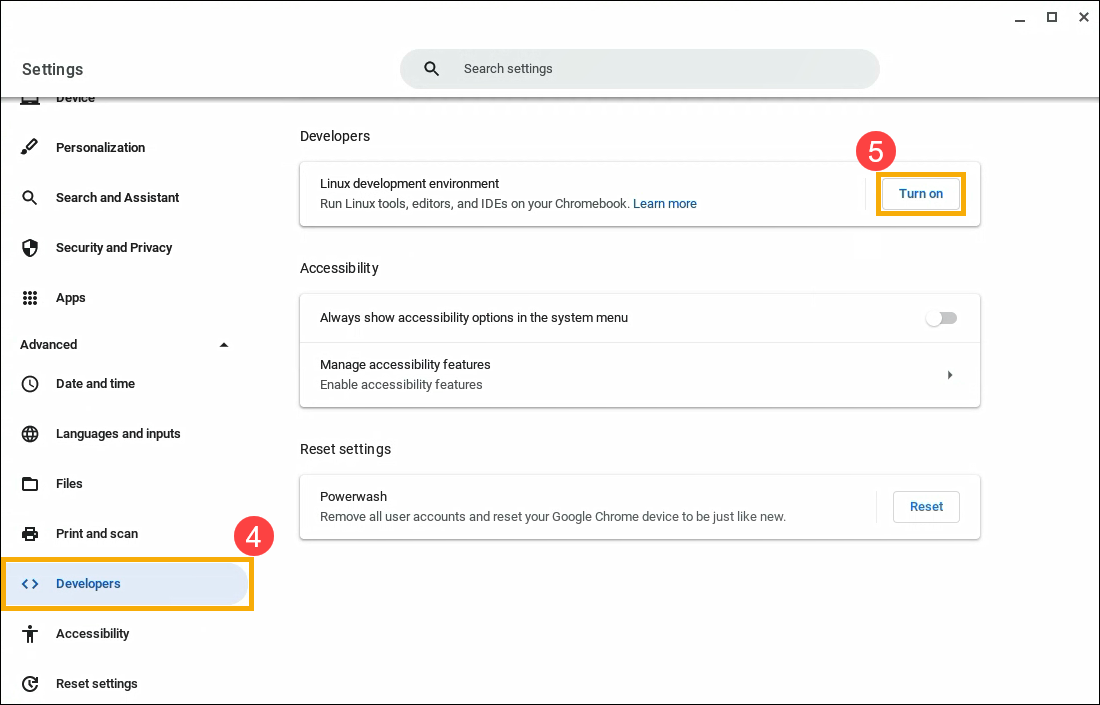
Pick the bottom option to Enable Linux development environment. It just means your Chromebook will be part Linux now. You’ll need to give it a bit of hard drive to use. Four gigs will be more than enough for our purposes and shouldn’t affect ChromeOS
Without going Full Linux, there’s no shiny pretty app like the Play store, or App store etc. to find and install programmes (or as Linux calls them, ‘packages’) from. The ‘store’ does exist, though it’s called a repository. In the absence of a shiny app store, you have to use text commands in the Terminal to install programmes.
You get to the Terminal by hitting the Everything key and typing ‘Terminal’ then clicking on the icon.
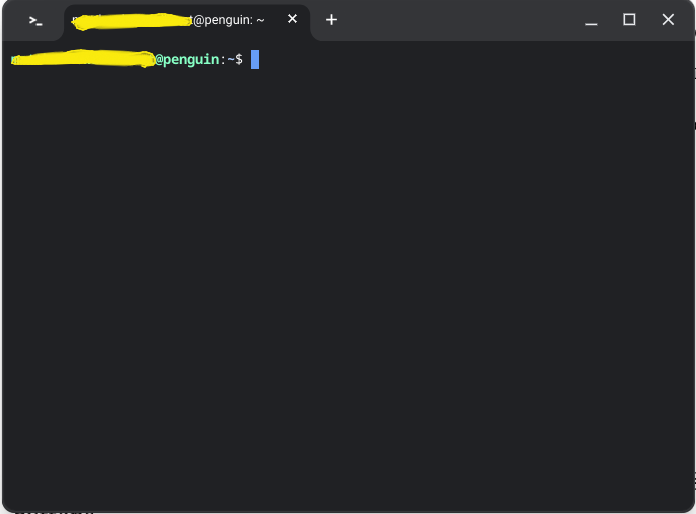 (The yellow scrawls are obscuring my Google ID. You should have your ID in their place)
They look impenetrable, but they’re just the equivalent of clicking ‘get’ or ‘install’ buttons. sudo apt install nemo
The internet is riddled with people who are far better equipped than I am to explain Linux command lines, so I encourage googling. However, in painfully simplistic terms:
SUDO - tells the Chromebook you have the right to install things (NB Linux heads: yes, I know it’s not quite that simple. But it will do for our purposes for the moment).
APT - tells it you want to install, update or remove a package
INSTALL - shockingly, this instructs the system you’re choosing the install option
NEMO - … and this is what you want it to install
Anyway, copy and paste those four words into the Terminal. You’ll get a rather cinematic scrolling commentary of what the Chromebook’s doing, stopping when it asks you whether you want to go ahead.
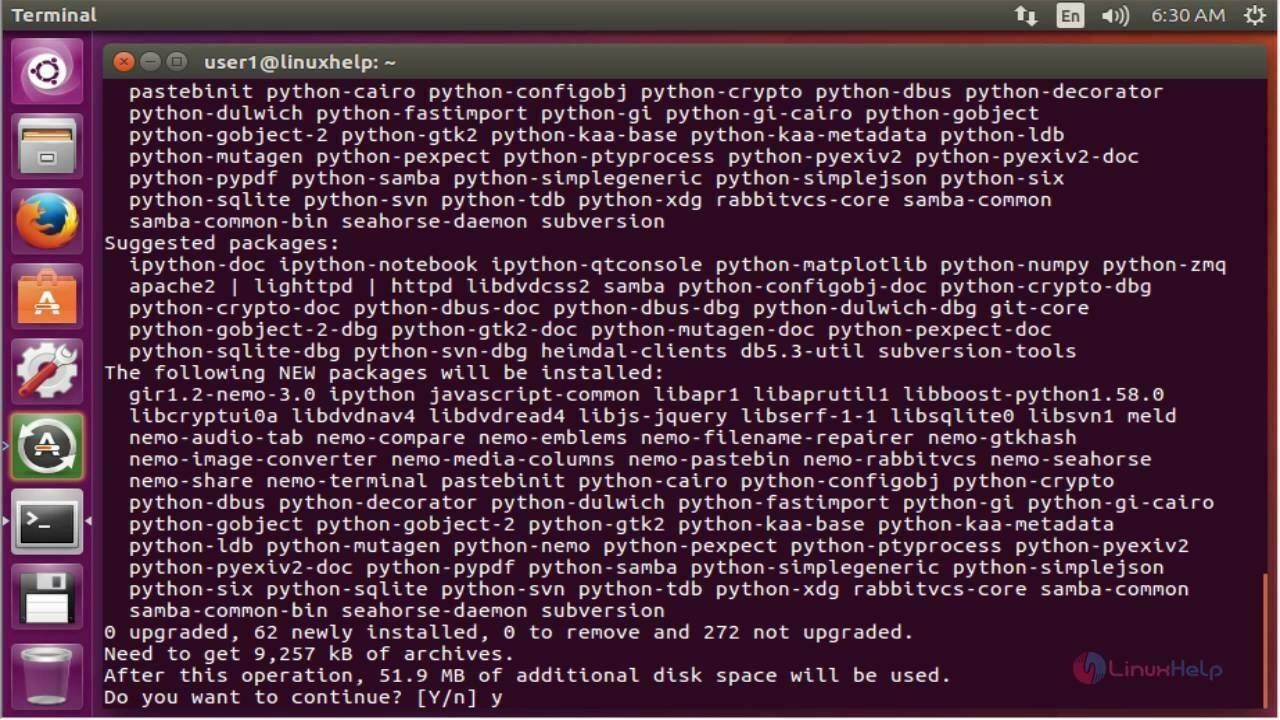
Thrillingly, like a 1980s BBC Micro text adventure, you can type ‘Y’ and hit return to go ahead.
There will be more cinematic scrolling and when it’s done, you’ll be back to the prompt.
This concludes your adventure with the Linux command line. You can return triumphantly to your ChromeOS village now you’ve accomplished your mission and vanquished the forces of darkness.
Most easily done by hitting the ‘Everything’ key and searching for Nemo. Sometimes it’s called ‘Files’. Either way, it’ll be represented by a little penguin icon, which you can click on. Assuming all’s well, you’ll now get a very recognisable file manager window, something like this.
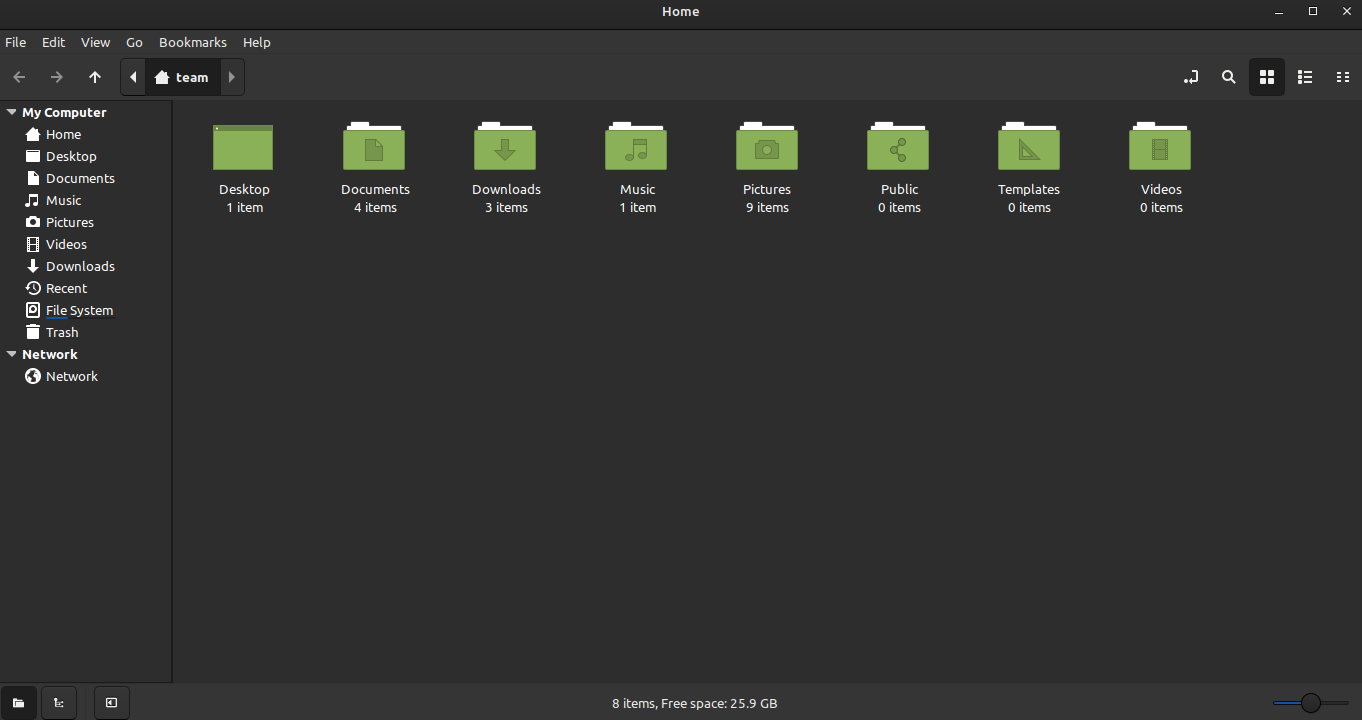
The icon will also be in your ‘shelf’, so you can pin it in the usual way for future use.
Since the lack of a proper file manager has bothered you enough to get this far, I’m assuming you can figure it out yourself, mostly.
IMPORTANT FACTS TO PREVENT LOSS OF ALL YOUR FILES
However, given you’re using Linux and you’re on a Chromebook, a couple of things to bear in mind.
The main one being:
YOUR FILES ARE IN /mnt/chromeos/.
LEAVE EVERYTHING ELSE ALONE UNLESS YOU KNOW WHAT YOU’RE DOING.
There will be two folders (aka directories): MyFiles and GoogleDrive. MyFiles (/mnt/chromeos/MyFiles)
MyFiles is part of the Linux system. MyFiles isn’t synced anywhere, it’s just on your hard drive.
GoogleDrive (/mnt/chromeos/GoogleDrive/MyDrive)
This is where your Google Drive files are. It’s a mirror of your Google Drive, which you will already be using as part of normal Chromebook operations.
However.
If you’re clicking into that folder now, you may have noticed it’s not showing any of your Google Drive files. Do not panic.
This is what you need to do.
One last time, you will need to return to the ChromeOS file manager. Think of it as closure so you can move on. You need to make custody arrangements for your files.
You need to tell ChromeOS to let Linux see its files and folders.
You do this by right-clicking on the folder or file and choosing ‘Manage Linux Sharing’, and turning it on. Whatever you do will apply to that folder and everything it contains.
You might have to close and re-open Nemo at this point so it registers it can now see the files. On the other hand, you might not.
The back in your Nemo, for your own sanity, I suggest right-clicking on your most used folders and choosing ‘favourite’ so they appear in the box of favourite places in the left of the Nemo window and you don’t have to traverse through your folders all the time.
That’s pretty much it.
One last thing: I’m not a Linux head. If you want to know more about it, I suggest googling and also reddit.com/r/linux4noobies. I’ve mostly used the excellent instructions on Chromeunboxed However, it was written a few years ago, before Chromebooks made using Linux so easy, so a lot of the stuff about permissions doesn’t apply any more.
Enjoy endless fiddling about with your files but slightly more conveniently.
When Logan Roy died fishing his iPhone out of the toilet on his private jet in Succession, his daughter Shiv hesitated over whether to go and see his body. Her brother Roman clocked what was going on in her head, as co-traumatised siblings tend to, and said ‘he’s not going to shout at you if you don’t.’
That’s the main thing when the narc/abuser/toxic/whatever-we’re-calling-the-nasty-fuckers this week dies. The venomous terrifying shouty person is never going to get to do their venomous terrifying shouting at you again.
There is no ambivalence. There’s no loss, no missed opportunities, no gap in your life. There is no regret of what might’ve been, or things that could’ve been better, because nothing was ever going to be better. There was only ever going to be the psychological equivalent of living in London during the blitz.
Until now, if you got through the night without the sirens going off, it was because the weather stopped the bombers, or they were busy destroying Coventry instead.
You could get your breath back and your heart rate down but the radar stations and firewatchers of hypervigilance stayed at their posts and your background cortisol levels stayed up.
This is the bit that the non-complexically-traumatised people really really don’t understand. The traumatised know that people aren’t to be trusted and thinking you know what’s going on is for fools.
For the complexically-traumatised, If someone’s being nice to you, it’s just to try to get your guard down. Or maybe they’re being poisonously sarcastic on a level you haven’t quite worked out. Or something else that you haven’t thought of, but it won’t be good. Anyway — nothing’s simple, nothing’s straightforwardly a good thing, and sooner or later everything turns to shit. And then there’s the original source of the trauma, sending dive bombers to screech overhead at frequent but unpredictable intervals, just to keep it fresh.
Then one day you find the Luftwaffe is a cadaver in a nursing home with a morphine drip stuck in in her arm. The bombers are permanently grounded. And — this is the Shiv bit — the person who would’ve shouted at you for not going to see the cadaver is the cadaver. Cadavers don’t do venomous terrifying shouting, which was always your main issue, so the problem has gone away of its own volition.
What’s not to love?
This doesn’t stop other people expect you to fall apart.
The ‘oh but she was your mother’ narrative is strong.
At the wake, they look at you over the catered vol au vents as though cracks are going to appear in your outer surface and everything will crumble, like an astronaut freezing in space. They don’t realise you’re in the Shire after the defeat of Sauron. Sunlight is breaking out over green meadows everywhere and buds are sprouting.
I did wonder if I was going to crack up, myself, too. I didn’t ever feel like I would, but apparently these things apparently can ambush you. And there was nothing. It was all just an administrative inconvenience, and I outsourced it to executors, funeral directors, house clearance people. Whoever’s job it was, because it wasn’t mine. This was moving house. This was figuring out the best route to a new work place. This was the admin to move forward.
You may think this sounds like avoidance, and I can’t prove you wrong. All I can say is that I’ve done avoidance, based on Trauma Things, and I know what it feels like, and this didn’t feel like it. This felt like time management.
Some child development researchers consider the mother and child’s brains to be the same organism in the first few weeks of life, functionally. They’re so intertwined, so obsessed with each other, that they respond like a single system. In the baby’s brain, many neural pathways grow, seeking out stimulation. Light, smells, sounds, touch, things outside itself, as far as a baby registers that a world exists outside itself.
(Sidenote: babies eventually realise there’s a world outside itself. My mother never did.)
The more the neural pathways get used, the more they prosper a survive. And not just sensory things. They pick up emotions, like love, and feelings like safety.
If the pathways don’t get used, they don’t survive. They are sluts for stimuli, and quick to wander off when the stimuli cease, and never more than in those first few weeks, when brains throw all manner of shit at the wall to see what sticks, neurally speaking.
So to loop back to my mother dying being no more than an admin problem: my neonatal brain didn’t get offered a lot of safety or other nice things at that formative stage, and all the hopeful neural pathways, eager for love and safety and other nice things, realised they were out of luck and wandered off to save themselves for other important tasks, like, it turns out remembering what Mark Knopfler says between songs on the live Alchemy album.
But that first few weeks of wariness never leave you or your neuronal setup, which now doesn’t include the ones geared up to expect love and safety.
I’m not a robot or psychopath. It’s more that the emotional pathways grew later. The brain learns to work around these things, just like relearning to talk after a stroke, or the internet when someone cuts through an undersea cable. But it’s never quite the same. It doesn’t have the intuitive nuance and speed of the early pathways, honed and perfected over the years.
But still, the really primal feelings that people are waiting to burst out over the catered vol au vents just don’t seem to be there. Maybe I don’t have physical capacity for them and the vol au vents are safe.
The main thing is that the bombing has stopped, and it’s possible to start rebuild, working around the craters and rubble.

Finished reading: Harlan Coben - Win by Harlan Coben 📚
His books are so much smarter and snarkier than his TV series.